
Just Bought Other BPM Software? Then the Real Test Begins Now
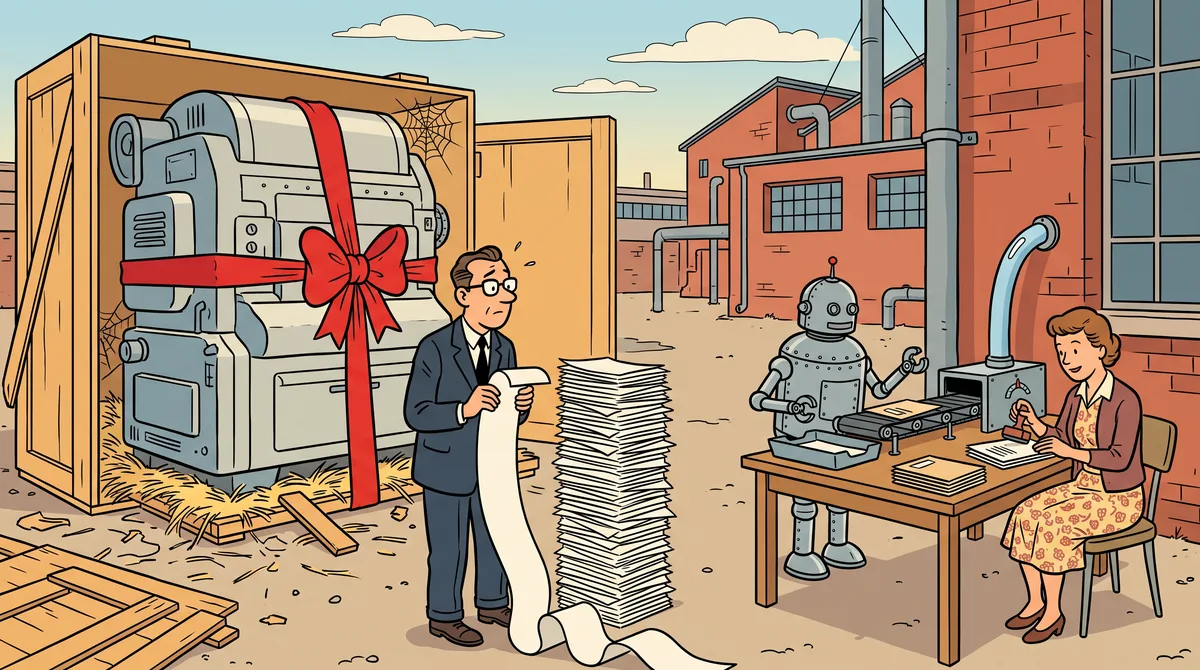
The licence is ordered. The platform has been chosen. Perhaps an implementation partner has already been hired and the first workshop has taken place.
Then not a single process has been digitalised yet.
That may sound like a jibe, but it describes the most important distinction in any BPM rollout: buying software and turning work procedures into running applications are two different things. Anyone who has just bought other BPM software should not cling to a slow implementation out of misplaced consistency. Right now is the right moment for a cross-check with flying dog.
The purchase does not solve the implementation bottleneck
When selecting a BPM platform, functionality, integration, operations and licence model rightly take centre stage. But the economic benefit only comes from the procedures that actually get implemented with it.
If every process remains a longer project after the rollout, the original bottleneck has simply moved into a new tool. Models and specifications still have to be translated by hand into forms, data structures, rules and permissions. Every change needs a new cycle. The testing work stays with the business department and IT.
So the decisive question is not only what a platform can do in principle. It is: how quickly does my own process reach a tested, usable state?
An early switch prevents further implementation costs
A purchase decision must not mean that all later decisions merely seek to confirm it. The earlier selection may have been right given what was known at the time. What matters is which path leads to running processes faster from today.
Anyone who has already invested months in implementation and custom development will usually be looking at a switch anyway. But the comparison pays off shortly after the purchase too. At that point you can still prevent the licence decision from turning into years of implementation and change backlog as well.
Changing course does not mean throwing away everything done so far. Existing BPMN models, process descriptions, PDFs, Visio diagrams and screenshots can serve as source material. The business work on responsibilities, approvals and exceptions stays valuable. At flying dog this becomes a running application, and BPMN can be generated again from the built process.
Nor is an immediate complete replacement necessary. Existing tools can stay in place for the time being while a process not yet implemented serves as a concrete comparison.
The cross-check: one process, two results
The fairest comparison does not take place between two presentations. It takes place on a procedure that has not yet been fully implemented in the existing environment.
Both paths should be measured against the same questions:
- What comes out of the existing documents? A model, a prototype or a complete business application with data, forms, roles and workflow?
- How is it tested? Are only prepared test cases worked through, or does the AI itself log in as every role involved and run through the process?
- What can be proven? Do deadlines actually fire? Which notification went to which group and when? What findings does the test report contain?
- What happens with a change? Does a new development and test project begin, or does the AI rebuild the application and test the whole process again?
- When can the business department judge for itself? Only after the rollout, or on its own procedure, played through, before the final decision?
This comparison makes the difference concrete. It is not about which platform has the longer feature list, but about which approach delivers a reliable working result faster.
What flying dog does differently
At flying dog, the business department describes the requirements or provides existing documents. Using MCP, the AI builds the data model, interfaces, server-side logic and process as one coherent business application.
It then creates test accounts for the roles and plays the process through itself. Deadlines really run out with test values, mail delivery is logged, and findings lead to correction and another test. The result is not merely a proposal for later implementation but a tested process version with its report.
The same cycle continues after go-live. New rules and changed responsibilities lead to a new version and a complete new run. This later ability to change belongs in the economic comparison: the costs of a BPM platform do not arise only at its introduction, but over the entire life of its processes.
For organisations with special requirements for operations and data control, there is also on-premise operation, source code included in the delivery and free choice of model for AI agents in the process.
The running procedure decides, not the licence
Switching platforms is not a given. If the existing software produces tested processes quickly and carries later changes with ease, there is no reason to switch. But if the licence is there and the implementation backlog keeps growing, the earlier investment should be no argument for more waiting.
The wrong question then is: “What does switching cost?”
The right question is: “What does it cost if, months from now, we still have more purchased software than running processes?”
Give us a process that has not yet been implemented with your new BPM software. We build it and play it through. Then you compare not two presentations but two results.